14-day forecast
Review operation-specific advisory levels and drill into hourly conditions for flagged days.
Forecast and advisories →One platform
Price weather allowances, interpret operational risk, notify project parties and assemble historical weather evidence from a consistent location-based workflow.
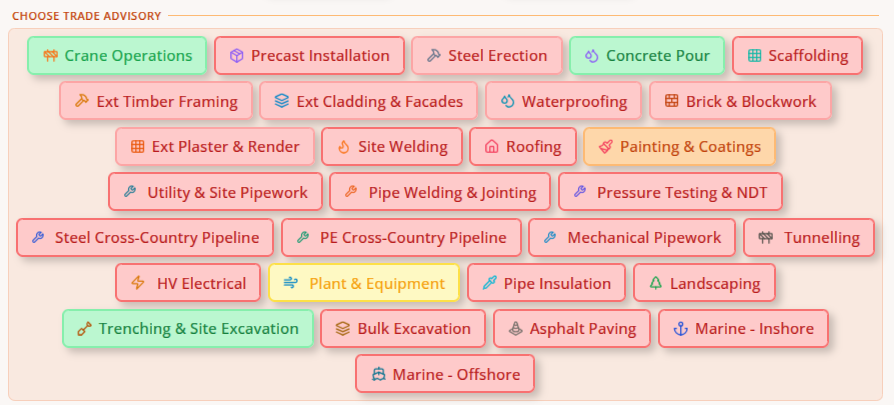
Each tool addresses a different project decision while reusing location and project information where the application supports it.
Review operation-specific advisory levels and drill into hourly conditions for flagged days.
Forecast and advisories →Retrieve past conditions for a selected project location and export supporting records.
Historical weather data →Compare a selected month with a five- or ten-year benchmark and organise identified events.
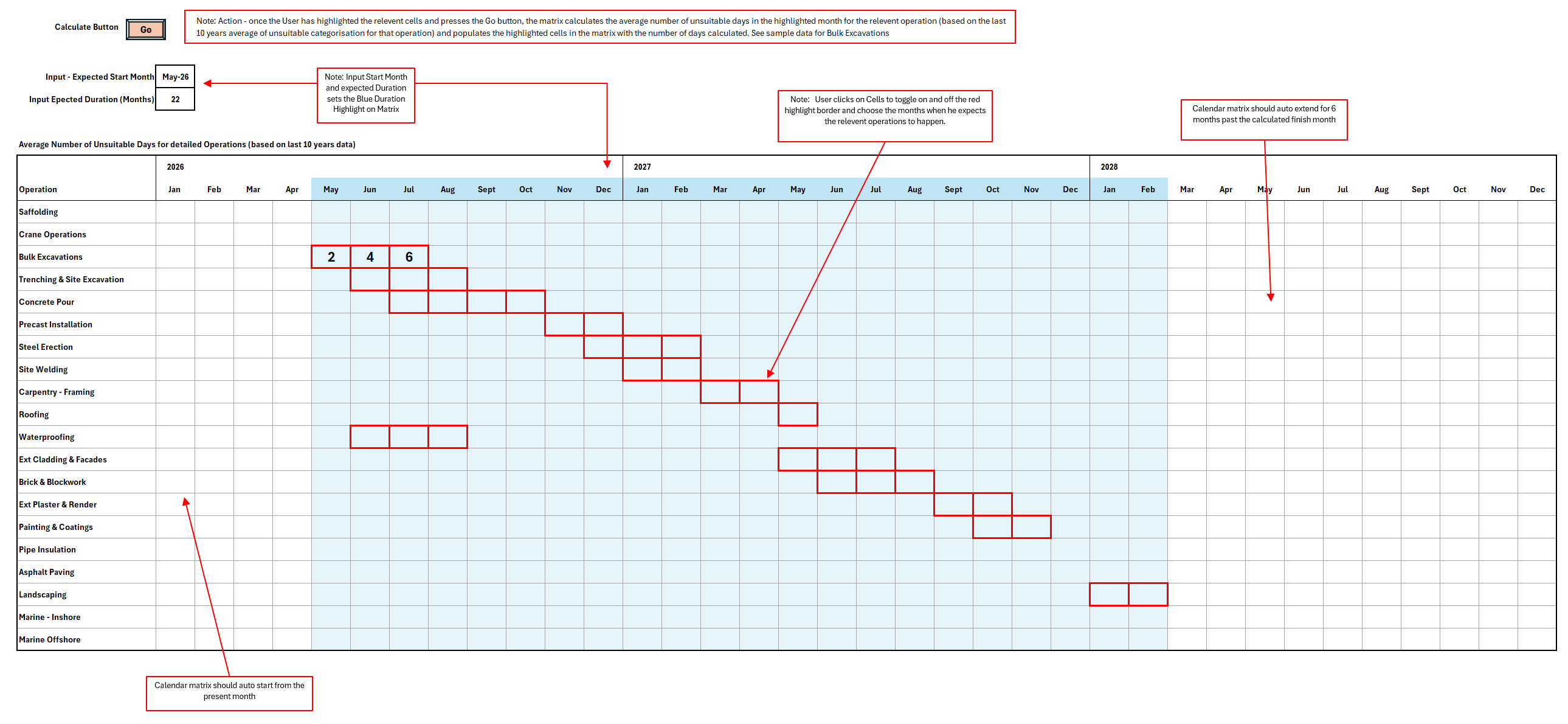
EOT evidence →Estimate average unsuitable days by project month and assigned trade operation.
Tender planning tool →Create an editable notice draft containing forecast conditions, anticipated impact and proposed mitigation.
Early-warning notices →Live site conditions
The map below shows animated wind flow and current precipitation at your approximate location using live weather data. The same overlay is available inside the platform for any project site worldwide — helping site teams understand the immediate environment around their site before committing crews.
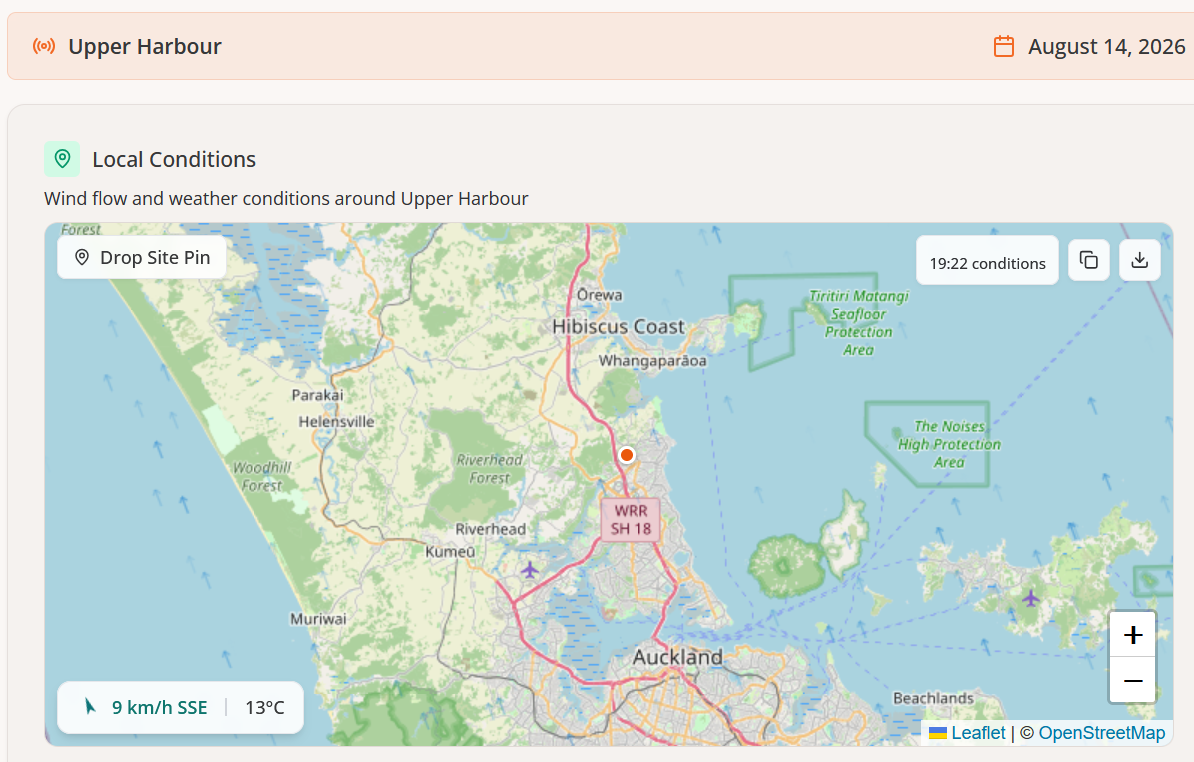
Weather: Open-Meteo · Map: OpenStreetMap · Location estimated from your IP address.
Configurable thresholds
Every project has different operational limits — defined by the crane manufacturer, the welding procedure specification, the coating product data sheet or the contract method statement. The notifications system lets you configure project-specific alert thresholds so the platform flags the conditions that matter for your work, not generic defaults.
Set the wind speed and gust limits relevant to your crane configuration, scaffold design or structural welding procedure — and receive notification before forecast conditions reach your threshold.
Configure rainfall intensity alerts for planned concrete pours, earthworks compaction, pipeline installation or coating application windows. Set humidity and dew point alerts for blasting, painting or waterproofing work.
Set minimum or maximum temperature alerts for concrete placement and curing, mortar setting, coating application or any temperature-sensitive site operation referenced in your specification.
A connected process
Weather risk changes as a project moves from estimating to delivery. A connected workflow reduces the need to reconstruct the story after a delay has occurred.
Start with the project location and relevant time period.
Connect weather conditions to the activities being planned or reviewed.
Review the on-screen analysis and download available evidence or editable documents.
All sectors
Weather-related delays and EOT entitlements are not unique to building construction. Civil and infrastructure contractors face identical exposure — and the same contract mechanisms to manage it.
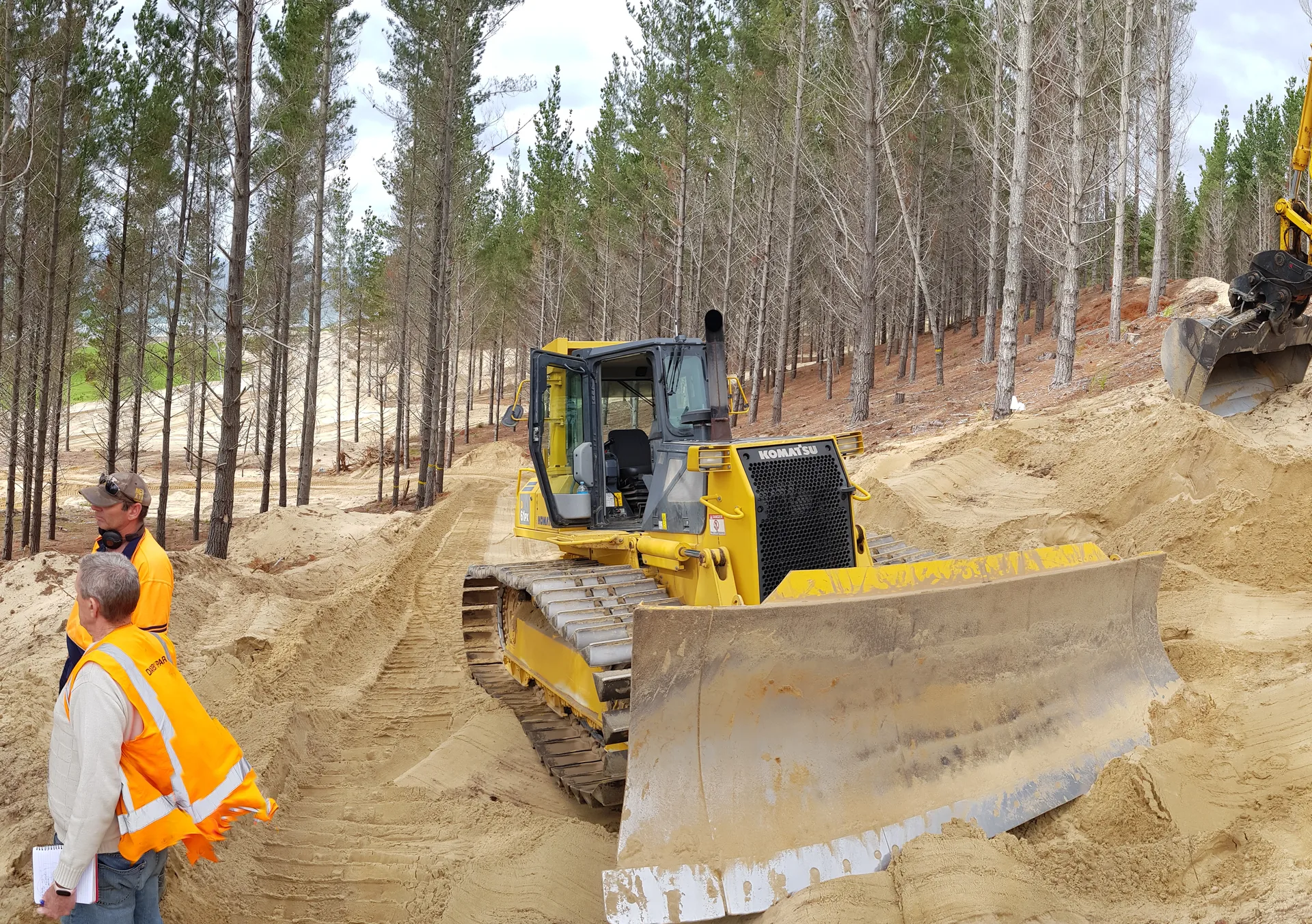
Weather-related EOT entitlements apply to civil contracts under any standard form — NEC4, FIDIC, JCT, AS 4000 or NZS 3910 — in exactly the same way as building contracts. The platform's threshold library covers earthworks, road surfacing and pipeline operations alongside standard building trades.
Further reading
Construction weather tools span four distinct categories — field workability apps, on-site hardware stations, enterprise alert systems and contractual workflow platforms. Each solves a different problem for a different user at a different stage of the project.
A fair, category-by-category comparison — including where Construction Weather fits and where it does not.
Beta access
All five tools are available now at no cost. Use Construction Weather on live projects, give feedback through the survey inside the platform and lock in a lifetime discount when Pro launches.
No app to download — works on any device. Add it to your phone's home screen in one tap for quick site access.
Common Questions
Construction Weather is designed for use on projects let under NEC3, NEC4, JCT and FIDIC contracts, where adverse weather clauses create entitlement to extension of time or additional cost. The platform's trade thresholds and EOT evidence tools are aligned to how adverse weather is assessed under these standard forms. It is equally suitable for bespoke contracts that reference adverse or exceptional weather conditions.
The platform includes five integrated tools: a 14-day trade forecast with operation-specific Green, Amber and Red advisories; a historical weather data retrieval tool; an EOT Evidence Generator that benchmarks a project month against five or ten years of historical data; a Tender Planning tool that calculates average unsuitable days by operation and project month; and an Early Warning Notice generator that produces editable draft notices from forecast data.
A standard weather app tells you it will rain. Construction Weather tells you whether that rain — or wind, frost, heat or humidity — stops the specific operation you have planned. Every tool is built around construction trade operations and contract processes rather than general weather presentation. Outputs are structured for construction decision-making: operational advisories, early warning notices and EOT evidence documents, not forecasts designed for the general public.
The platform covers more than 20 trade operations including crane and lifting, scaffold erection, steel erection, concrete placement, structural welding, painting and applied coatings, blasting and surface preparation, roofing and waterproofing, masonry, earthworks, road surfacing, piling, glazing and timber framing. Each trade has its own weather threshold set derived from published British Standards, NEC and JCT contract conventions, and CIOB and RICS guidance.
Yes. Construction Weather is a web-based platform that works on any device — phone, tablet or desktop — without downloading an app. It can be added to your phone's home screen in one tap for quick site access.
Explore construction-focused forecasts, historical records and reporting tools for your next project location.